What is Impulse Oscillometry?
Impulse Oscillometry is a pulmonary function test that measures the mechanical properties of the respiratory system by analyzing airway resistance and reactance. Unlike spirometry, which requires forced breathing maneuvers, IOS uses small pressure waves (oscillations) to evaluate airflow obstruction while the patient breathes normally.
This test provides detailed insights into both central and peripheral airway resistance, which is particularly helpful in detecting early-stage lung diseases.
Symptoms Indicating the Need for Impulse Oscillometry
Patients experiencing the following symptoms may benefit from an IOS test:
- Persistent cough
- Wheezing or whistling sounds while breathing
- Shortness of breath (dyspnea)
- Chest tightness or discomfort
- Difficulty in performing daily activities due to respiratory issues
- Increased susceptibility to respiratory infections
- Unexplained respiratory discomfort despite normal spirometry results
Individuals with a history of smoking, occupational exposure to pollutants, or a family history of respiratory diseases may also require regular IOS testing.
How is Impulse Oscillometry Performed?
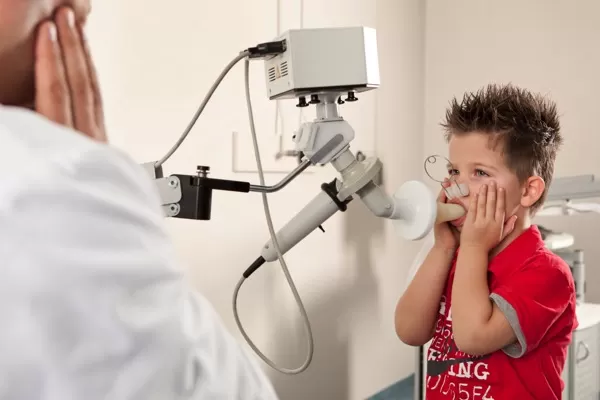
- The patient sits in a relaxed position and is asked to breathe normally through a mouthpiece while wearing a nose clip.
- A device generates sound waves (oscillations) at varying frequencies while the patient breathes quietly.
- These oscillations pass through the airways, and the device measures how the lungs respond.
- The test usually takes a few minutes and requires no forced breathing efforts, making it easier for patients of all ages.
- The data is analyzed to assess airway resistance and lung function, helping in diagnosing respiratory conditions.
Interpreting Impulse Oscillometry Results
The results of an IOS test are based on the following parameters:
- Total Airway Resistance (R5): Indicates overall airway resistance, including both central and peripheral airways.
- Central Airway Resistance (R20): Measures resistance in the larger airways.
- Peripheral Airway Resistance (R5-R20): Helps detect small airway diseases, which may not be evident in spirometry.
- Reactance (X5): Evaluates lung elasticity and airway compliance.
- Resonant Frequency (Fres): Higher values may indicate lung stiffness or airway obstruction.
These results help in differentiating between obstructive and restrictive lung diseases, guiding clinicians in making an accurate diagnosis and treatment plan.
Preventive Measures & Management
To maintain good respiratory health and prevent lung diseases, consider the following measures:
- Avoid Smoking: Smoking is a major cause of chronic lung diseases and airway obstruction.
- Limit Exposure to Pollutants: Minimize exposure to dust, chemicals, and environmental pollutants.
- Regular Physical Activity: Engaging in breathing exercises and aerobic activities improves lung capacity.
- Vaccinations: Get flu and pneumonia vaccines to protect against respiratory infections.
- Early Diagnosis & Treatment: Routine pulmonary function tests, including IOS, help in early disease detection and better management.
Conclusion
Impulse Oscillometry is a highly effective, non-invasive lung function test that provides valuable insights into airway resistance and lung mechanics. It is particularly useful for patients who have difficulty performing spirometry, including young children and the elderly. Regular IOS testing can help in early diagnosis and effective management of respiratory diseases.